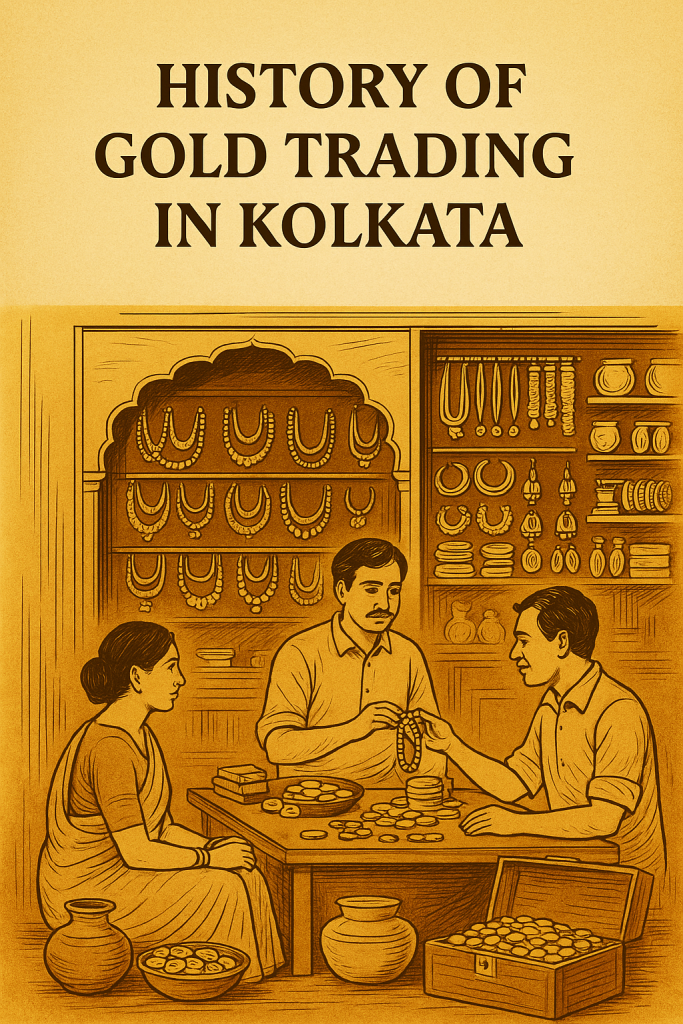
Kolkata, formerly known as Calcutta, has long been a center of commerce, culture, and craftsmanship in eastern India. Among its many renowned trades, the gold trade holds a special place, woven deeply into the city’s social, economic, and cultural fabric. The history of gold trading in Kolkata is as rich and lustrous as the metal itself, spanning centuries and evolving through various historical periods.
Origins in Colonial Calcutta
The gold trade in Kolkata dates back to the 18th century, when the city became the capital of British India. With the establishment of the East India Company, Kolkata transformed into a booming trade hub. European merchants, wealthy Bengali zamindars (landowners), and Marwari businessmen all contributed to the growth of the bullion and jewelry markets.
During this time, gold was imported through port cities and distributed through a network of traders. Kolkata’s central location and access to sea routes made it an ideal place for gold to be traded, shaped, and sold.
Emergence of Traditional Jewellers
By the 19th century, several families and communities became synonymous with gold craftsmanship and trading. Bengali karigars (artisans), skilled in detailed handwork, created exquisite gold jewelry, especially for weddings and festivals. The city’s Burrabazar and Bowbazar areas became famous for their dense clusters of jewellers, many of which still exist today.
Traditional designs like ‘chur’, ‘bala’, ‘tikli’, and ‘sita haar’ became iconic to Bengali culture and were often passed down through generations.
Gold as a Cultural Symbol
In Kolkata, gold was never just a commodity; it was a symbol of prosperity, security, and social status. It played a crucial role in Bengali rituals—from annaprasan (baby’s first rice ceremony) to marriages, Durga Puja, and even in death ceremonies. As a result, demand for gold remained steady even during times of economic instability.
Post-Independence and Economic Changes
After India’s independence in 1947, the gold trade in Kolkata underwent several transformations. The government’s policies on gold control, imports, and taxation led to a rise in parallel markets and smuggling through nearby ports and borders, particularly through Bangladesh and Nepal.
Despite these challenges, Kolkata remained a stronghold of gold trading, buoyed by local demand and the presence of large goldsmith families and wholesalers.
Modernization and the Rise of Hallmarked Gold
In the late 1990s and early 2000s, the gold trade in Kolkata saw significant modernization. The introduction of hallmarking and standardization of purity brought greater transparency to the trade. Large showrooms and branded jewellers began to emerge alongside traditional shops.
Consumers began to value trust and certification, leading to the growth of organized retail chains. However, old marketplaces like Bowbazar, Gariahat, Hatibagan, and Burrabazar retained their charm, serving both loyal customers and tourists looking for authentic craftsmanship.
Present Day Scenario
Today, Kolkata remains a vital player in India’s gold market. The city boasts:
- A blend of traditional handcrafted jewelry and modern machine-made designs
- A thriving ecosystem of wholesalers, refiners, buyers, and retailers
- A growing presence of digital gold platforms and online gold buying services
The rise of gold buying companies, which purchase old or unused gold in exchange for instant cash, has also added a new dimension to the trade. These businesses cater to those seeking liquidity while offering transparent valuation services.